How to prevent collapse and serious injuries.
Older brick façades are a natural part of many buildings in Sweden. However, behind their robust appearance there is often a critical weakness: insufficient or aged anchoring. When a brick veneer wall is no longer properly secured, the consequences can be serious, both for the building and for people in its vicinity.
A clear example is the façade collapse in Uddevalla during Storm Dave, where parts of a brick façade failed under strong winds. The incident illustrates the importance of ensuring that brick veneer walls are correctly anchored and designed to withstand today’s wind loads.
Many brick veneer walls from the mid-20th century onwards are anchored with wall ties that can lose their function over time. The most common causes of failure are:
When the anchorage deteriorates, the brick veneer wall loses its connection to the backing structure. This can result in cracking, bulging and, in the worst case, collapse..

Ignoring the problem can have serious consequences:
Collapse of brick veneer walls usually occurs without warning, often in connection with strong winds.
To secure existing façades, post-installed anchoring is used, where new fixings are installed afterwards. Joma’s DryFix system is a proven and effective solution.
What is DryFix?
DryFix is a system of spiral wall ties made of acid-resistant stainless steel (EN 1.4401) used to re-anchor brick veneer walls to the backing structure, whether it is concrete, timber, brick or lightweight concrete..
Advantages of DryFix:
DryFix is used in everything from smaller properties to large multi-family residential buildings where long-term safety is essential.
Façade collapses such as the one in Uddevalla show that problems are often discovered only when it is already too late. Preventive work is therefore crucial.
At Joma, we support property owners, consultants and contractors with:
✔️ Pull-out testing and analysis of fixings for the specific building
The goal is simple: to ensure that the façade can withstand both today’s and tomorrow’s loads.
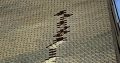
Older brick façades can pose a safety risk if they are not correctly anchored. With increasing wind loads and ageing materials, the need for inspection and remedial action is becoming ever more important.
With the right knowledge, the right method and the right products, it is possible to:
👉 Contact us and we will help you analyse your façade and develop the right solution for re-anchoring.